Why wood
The oldest material.
The newest technology.
We’ve built with wood for thousands of years, and it’s still ahead of its time. This page shows why.
While you’ve been on this page,
new wood has grown in Finland’s forests
The forest grows 3.3 m³ every second: the frame of one home every 9th second.*
Each line is half a percent, or 515,000 m³ of new wood. In total 103 million cubic metres, every single year.
Annual fellings are about 73% of the growth. The forest grows more each year than is used.
Nearly half of the growth, 47%, ends up as pulp, paper and board. Products that live for weeks or months.
All the country’s new homes, every year: 1.5% of the annual growth. Three lines out of two hundred.
One line = 0.5% of the annual growth of Finland’s forests.*
The question isn’t whether there’s enough wood.
The question is what it’s worth using for.
As it grows, wood stores the carbon it captures for as long as the product made from it lasts. Keep going; time runs to the right.
Read and recycled. The carbon returns to the air within weeks.
The box lives for one move. Then the carbon leaves.
The carbon stays in the structure for over a century. The building is a store.
A wood home doesn’t use wood up.
It banks it for a century.
The same floor plan, 75 m². Only the frame changes.
Building it releases 24,000 kg of carbon dioxide into the air before anyone has even moved in.
The same home, the same plan. A timber frame locks 30,000 kg away from the air, for a century.
It comes from a single choice. But how much is 54 tonnes, really?
Every kilometre offset, for two decades.
Return trips. One a year, for 27 years.
An average Finn’s entire footprint: housing, food and travel. For seven years.
35,000 new homes a year would be like a million cars vanishing from the roads. Every year.*
Wood doesn’t stop living when it becomes a wall. You notice it, and you can measure it.
A wood surface moves with the room, so the air is never too dry or too damp.
A footstep doesn’t clatter, it settles. A wood home has a quiet you can hear.
Studied and measured: heart rate and stress levels drop around wood surfaces.*
Modern engineered wood doesn’t mean a cabin. The world’s tallest wood building already reached 87 metres, and the next ones pass a hundred. The same material that calms a living room carries a city.
A material you don’t need to cover up.
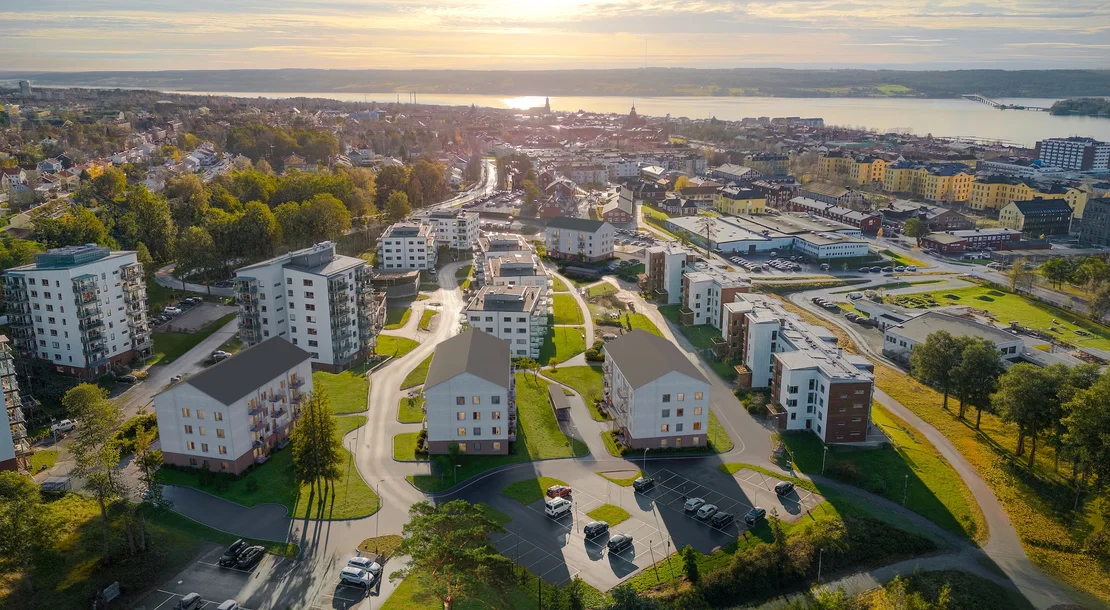
Wood grain is a fingerprint. No two are alike.
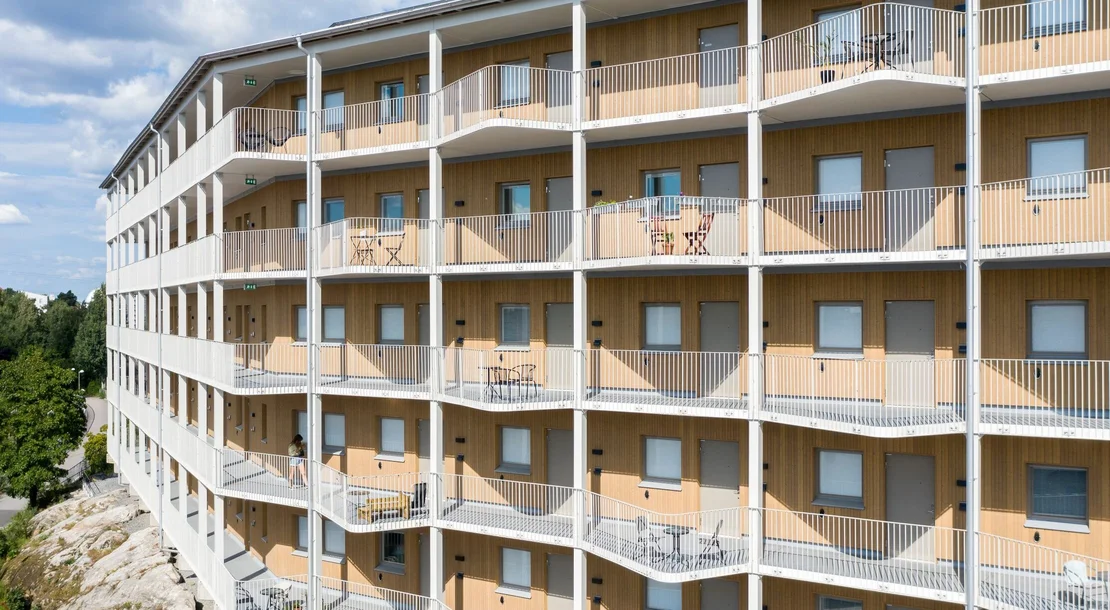
Wood doesn’t reflect light. It softens it.
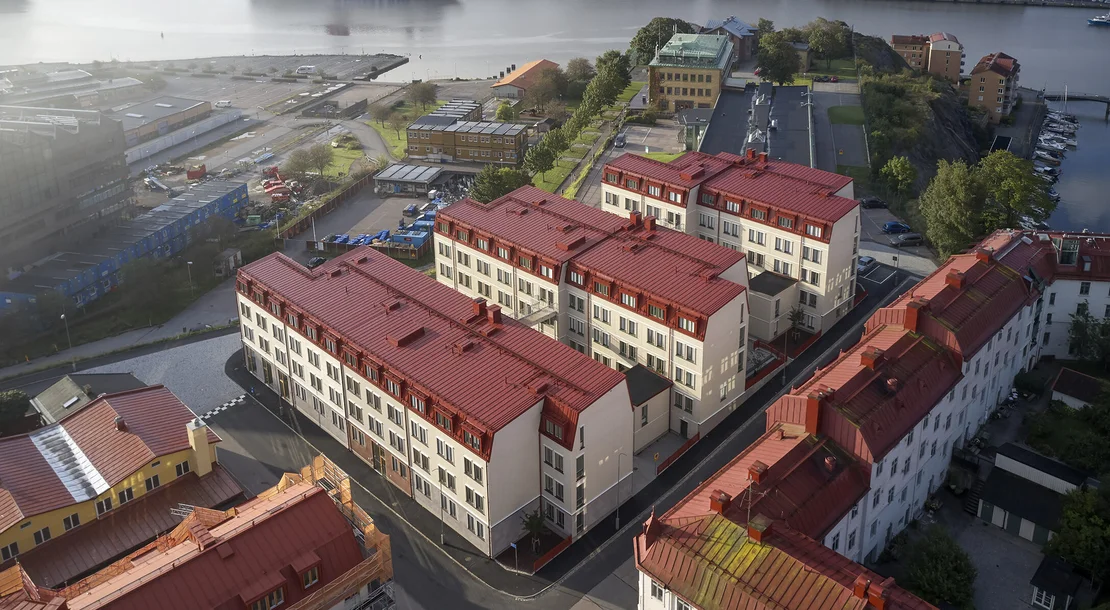
Warm to look at. Warm to touch.
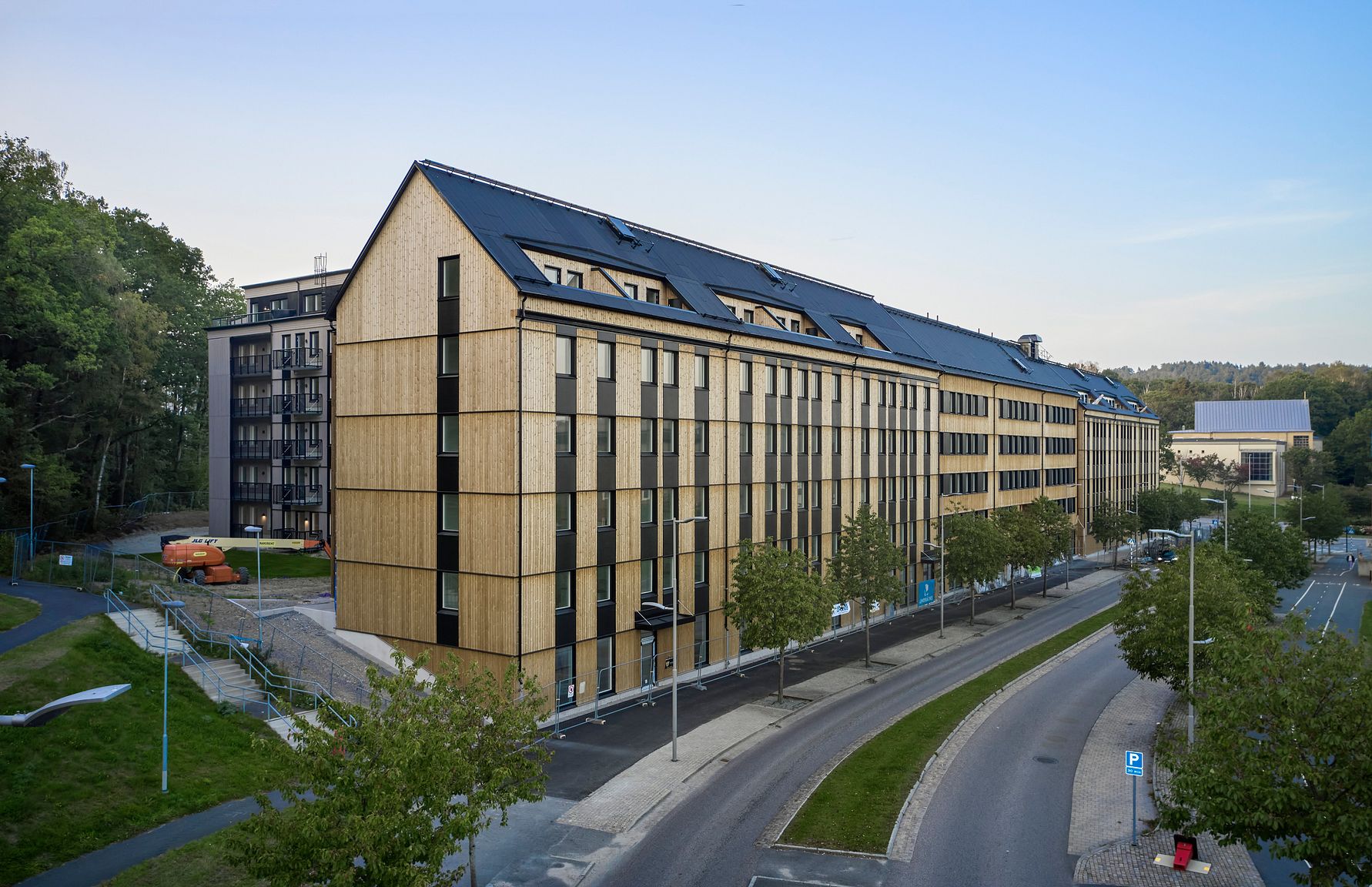
And all of this in the middle of the city.
While you read this page, 0 m³ of new wood grew in Finland’s forests.
The forest does its part every second. We do ours: we build homes from it.
Get in touch